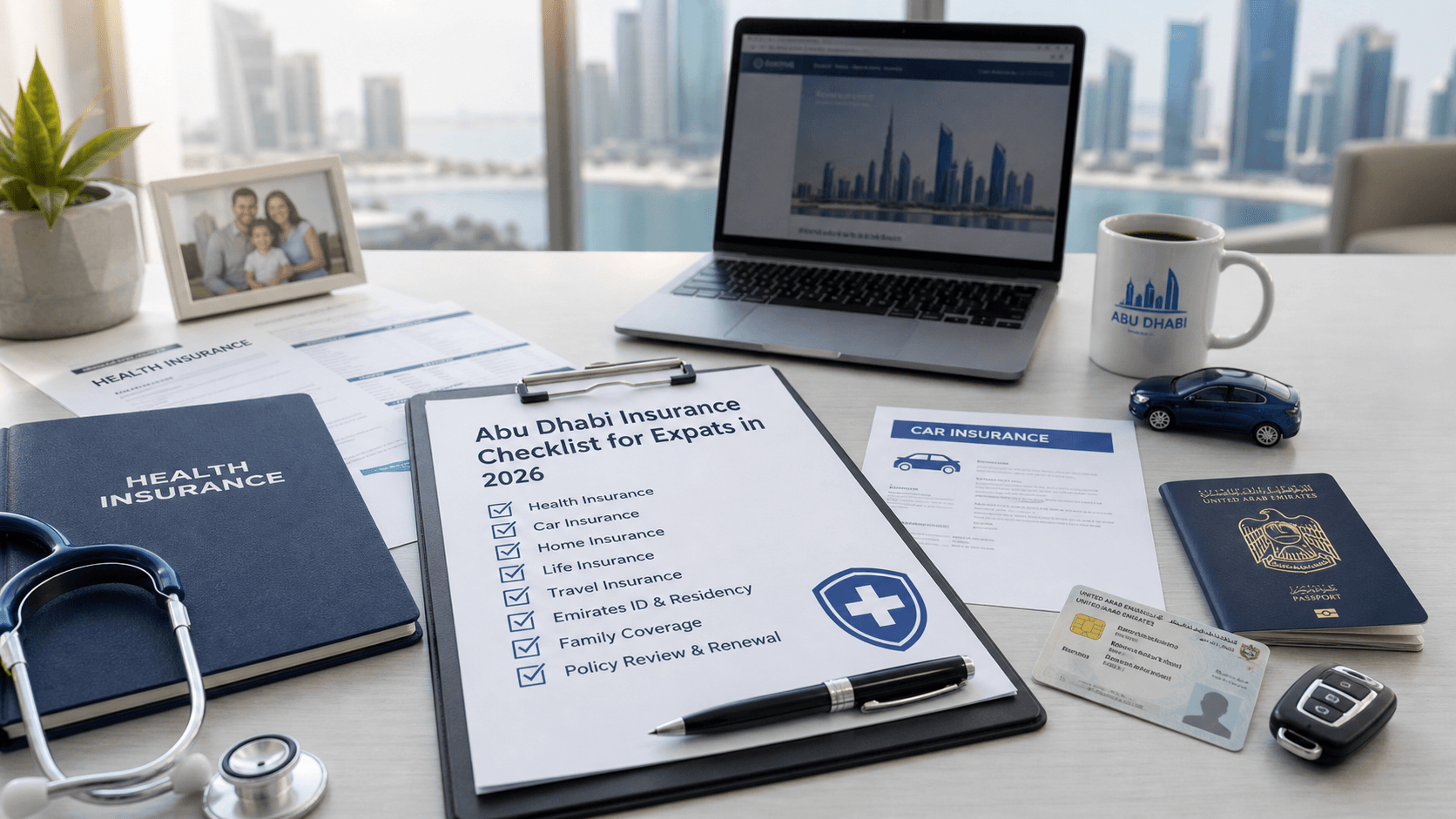

Abu Dhabi Insurance Checklist for Expats in 2026
Moving to Abu Dhabi can feel simple at first. You get your visa, find a place to live, open a bank account, and start work. Then insurance starts showing up everywhere. Health insurance for your visa. Car insurance if you drive. Home contents insurance if you rent. Travel insurance if you fly often. Life insurance if your family depends on your income. The problem is not that expats ignore insurance. The problem is they often buy the wrong type, or they buy too much because every policy sounds “necessary.”
Here is the simple answer: expats in Abu Dhabi need mandatory insurance first, then extra coverage based on lifestyle, family, work, and risk.
Quick Expat Insurance Checklist for Abu Dhabi
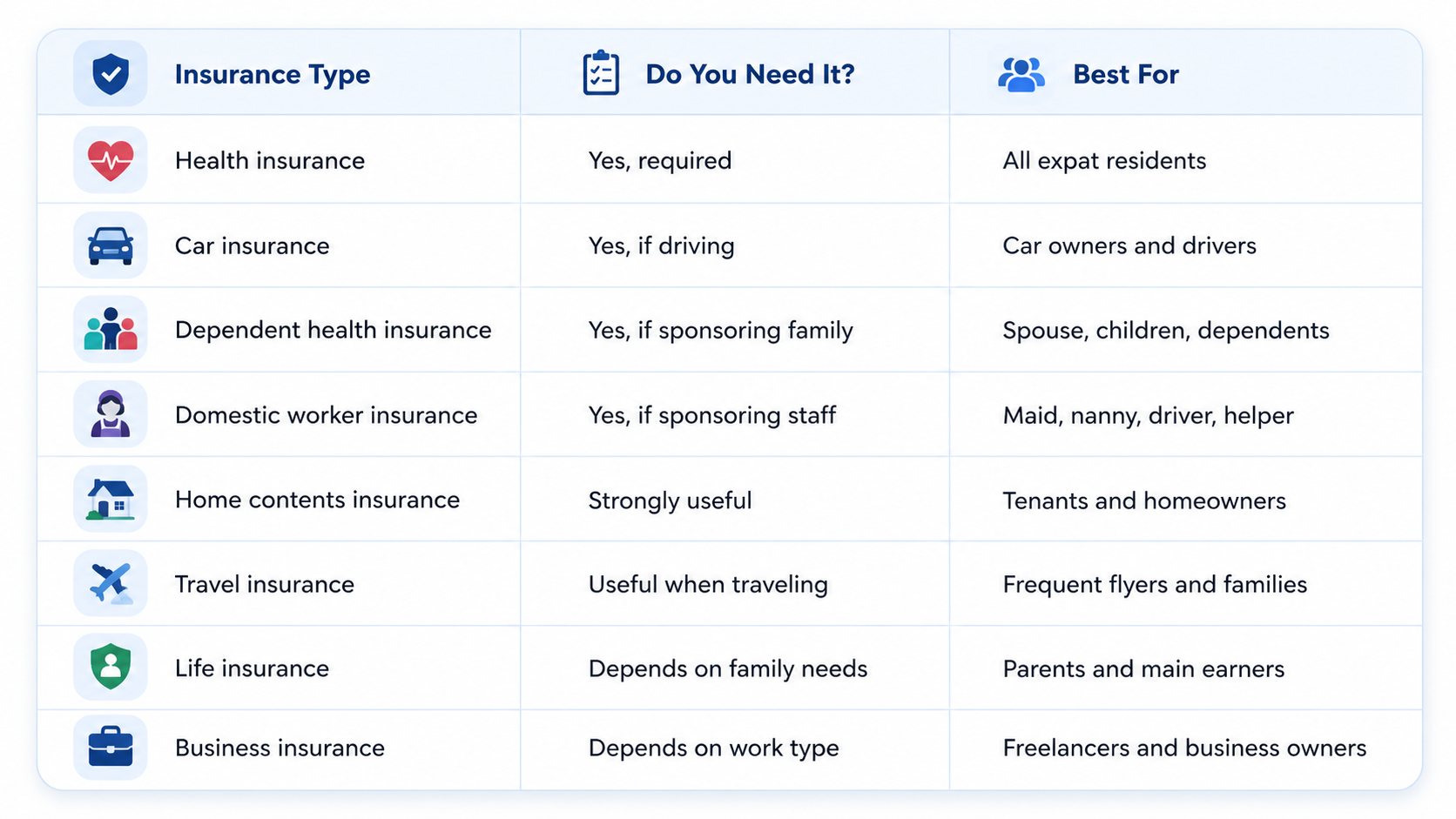
Use this checklist to see which insurance types Abu Dhabi expats actually need in 2026 based on family, work, travel, and driving needs.
Insurance Type | Do You Need It? | Best For |
|---|---|---|
Health insurance | Yes, required | All expat residents |
Car insurance | Yes, if driving | Car owners and drivers |
Dependent health insurance | Yes, if sponsoring family | Spouse, children, dependents |
Domestic worker insurance | Yes, if sponsoring staff | Maid, nanny, driver, helper |
Home contents insurance | Strongly useful | Tenants and homeowners |
Travel insurance | Useful when traveling | Frequent flyers and families |
Life insurance | Depends on family needs | Parents and main earners |
Business insurance | Depends on work type | Freelancers and business owners |
Not every expat needs every policy. Start with required coverage, then add protection that fits your real lifestyle in Abu Dhabi.
Before you review each policy in detail, watch this quick reel: https://www.instagram.com/reel/DS6h1zfDtci/ for a simple breakdown of the insurance expats should consider in Abu Dhabi in 2026.
1. Health Insurance: The First Policy Expats Need
Health insurance should be the first item on your Abu Dhabi insurance checklist. In Abu Dhabi, health insurance is compulsory for non-UAE nationals and their families who live in the emirate. Employers must provide health insurance for employees and eligible family members, including one wife and three children under 18. Sponsors must arrange coverage for people they sponsor if an employer does not cover them.
For expats, this is not only about doctor visits. It is connected to residency, work, family sponsorship, and day-to-day access to healthcare.
Health insurance checklist
Ask HR for the policy document
Check hospitals near your home
Confirm clinic access before choosing
Review medicine coverage before renewal
Check maternity terms before pregnancy
Save your insurance card offline
Confirm emergency support across the UAE
2. Dependent Health Insurance: Do Not Assume They Are Covered
A common expat mistake is assuming family members are automatically covered. They may not be. If your employer covers your family, ask for the full policy details. If you sponsor your spouse, children, parents, or other dependents yourself, you may need to arrange their health insurance separately.
This matters most before visa renewal, school admission, pregnancy planning, and long-term treatment.
Dependent insurance checklist
Confirm who the employer covers
Check spouse coverage in writing
Review child coverage before renewal
Ask about parents' insurance rules
Match coverage with visa sponsorship
Keep all policy cards saved
3. Car Insurance: Needed Only If You Drive
If you do not drive in Abu Dhabi, you do not need car insurance.
If you own or register a car, you need valid motor insurance. The Central Bank of the UAE explains that motor insurance includes third-party liability cover and comprehensive cover. Third-party liability covers damage caused to others, while comprehensive insurance can include protection for your own vehicle, based on policy terms.
For expats, the decision is simple. If the car is old and low value, third-party coverage may be enough. If the car is new, financed, or used every day, comprehensive coverage usually makes more sense.
Car insurance checklist
Choose cover based on car value
Check agency repair before buying
Review roadside assistance availability
Confirm GCC cover if traveling
Compare excess before policy purchase
Save claim contacts inside phone
4. Home Contents Insurance: Useful for Renters
Many expats rent apartments or villas in Abu Dhabi. The building may be insured by the landlord, but your own belongings are usually your responsibility. Home contents insurance can cover furniture, electronics, appliances, personal items, and sometimes tenant liability. Tenant insurance is not generally mandatory by law in the UAE, but it is often useful because landlord building insurance typically does not cover your personal items.
This is one policy expats often skip until water damage, fire, theft, or accidental damage happens.
Home contents checklist
List valuables before choosing coverage
Check electronics and appliance limits
Confirm water damage protection terms
Ask about accidental damage cover
Review tenant liability coverage carefully
Keep purchase receipts for valuables
5. Travel Insurance: Useful If You Leave Often
Travel insurance is not something every expat needs all year. It depends on how often you leave the UAE.
If you travel for holidays, business trips, family visits, or school breaks, travel insurance can cover medical emergencies abroad, trip delays, lost baggage, and cancellations depending on the policy.
This is especially useful for families, older travelers, and expats who visit countries where healthcare is expensive.
Travel insurance checklist
Buy before your trip starts
Check medical emergency limits carefully
Review cancellation coverage before booking
Confirm baggage delay claim rules
Match coverage with destination risks
Save policy documents before flying
6. Life Insurance: Needed If Someone Depends on You
Life insurance is not mandatory for most expats in Abu Dhabi, but it can be one of the most practical policies for families. You should consider it if your spouse, children, parents, or loan payments depend on your income. It is less about you and more about who would struggle financially if your income stopped. This matters for expats because family members may live in the UAE, back home, or across different countries.
Life insurance checklist
Consider it with family dependents
Match cover with yearly income
Include major loans and obligations
Choose a term cover for simplicity
Review beneficiaries every few years
Avoid buying more than needed
7. Business Insurance: Needed for Work Risk
Not every expat needs business insurance. Office employees usually do not need it personally. But if you are a freelancer, consultant, clinic owner, agency owner, contractor, or service provider, business insurance may protect you from client disputes, mistakes, property damage, or liability claims. This is more about your work risk than your visa status.
Business insurance checklist
Match insurance with client contracts
Check professional liability needs first
Review public liability exposure carefully
Cover equipment used for work
Ask about employee coverage needs
Keep certificates ready for clients
8. Domestic Worker Insurance: Needed If You Sponsor Staff
If you sponsor a maid, nanny, driver, cook, gardener, or other domestic worker, health insurance should be part of your sponsorship checklist. Abu Dhabi Residence Office explains that Tadbeer centers handle the domestic help visa process, which includes sponsorship, medical screening, insurance, and Emirates ID steps. Do not leave this until the last step. Missing insurance can delay visa processing or renewal.
Domestic worker checklist
Confirm insurance during visa processing
Use approved channels when applying
Keep policy copy with documents
Review the renewal date before expiry
Save emergency contact details clearly
Explain clinic access to the worker
Simple Buying Rule for Expats
Do not buy insurance because it sounds official. Buy it because it matches your life.
Use this simple order:
Start with legal requirements
Add family-related protection
Cover assets you cannot replace
Add travel cover when needed
Protect income if others depend
Review policies before renewal
Final Takeaway
Expats in Abu Dhabi do not need every insurance product in the market. You need health insurance first. You need car insurance only if you drive. You need dependent or domestic worker coverage if you sponsor people. After that, the right choice depends on your rent, travel habits, family needs, income, and work risk.
Frequently Asked Questions
Do expats need health insurance for Abu Dhabi residency?
Yes. Health insurance is part of the residency and sponsorship process for many expats in Abu Dhabi. Employers or sponsors are responsible for arranging coverage, depending on the person’s situation.
Is home insurance required for tenants in Abu Dhabi?
Home contents insurance is not generally mandatory for tenants, but it is useful because landlord insurance usually protects the building, not your personal belongings.
Should expats buy life insurance in Abu Dhabi?
Freelancers should consider business insurance if clients, contracts, advice, equipment, or legal responsibility are part of their work. It depends on the type of service offered.
What insurance do families need in Abu Dhabi?
Families usually need health insurance for each member, dependent coverage, travel insurance when flying, home contents cover when renting, and life insurance if one person earns most of the income.
What should expats check before buying insurance?
Expats should check coverage limits, exclusions, hospital networks, claim steps, renewal dates, add-ons, emergency support, and whether the policy matches their visa, family, driving, and work situation.
Related Posts

Is Insurance in Abu Dhabi Worth It in 2026? Cost Guide
Is insurance in Abu Dhabi worth it in 2026? Compare real health and car insurance costs, legal rules, accident benefits, and hidden policy limits before you buy
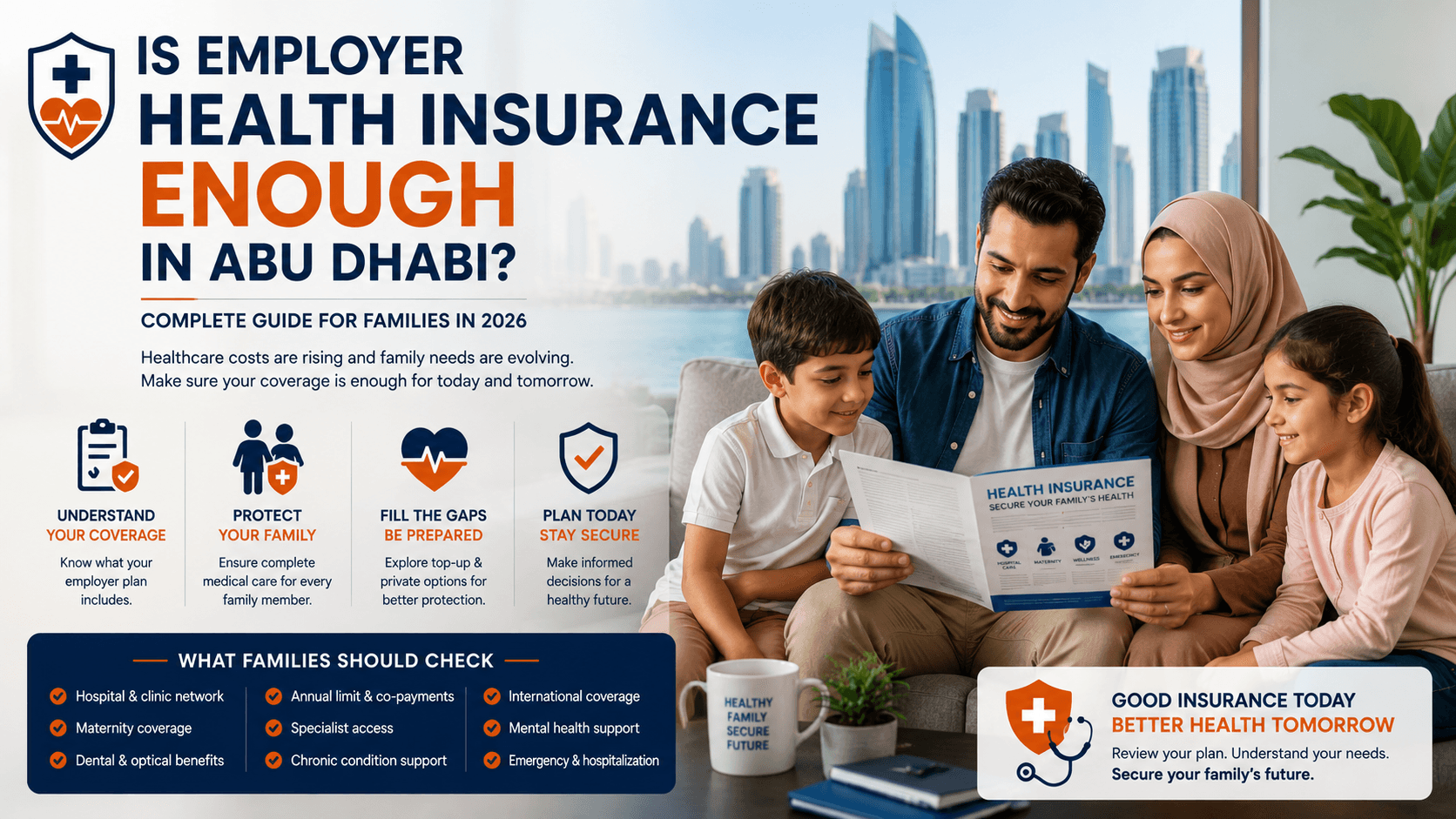
Is Employer Health Insurance Enough in Abu Dhabi?
Is employer health insurance enough for families in Abu Dhabi? Learn common gaps, family coverage limits, top-up options, and key checks.